
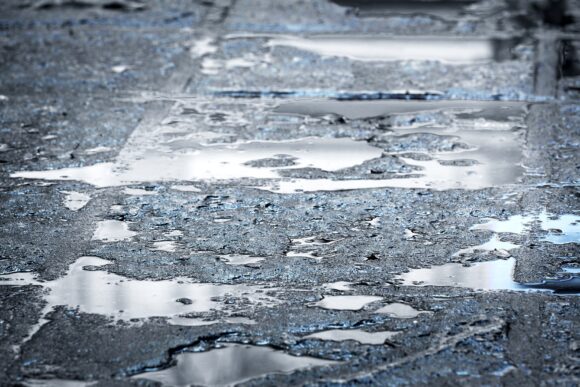
If you live in Lake Zurich, Grayslake, or anywhere in Lake County, you already know how unpredictable Midwest weather can be. Heavy spring rains, summer downpours, and freezing winter conditions all put your driveway to the test. What starts as a small puddle near your garage can quickly turn into cracking asphalt, foundation concerns, or dangerously slick ice patches. For homeowners with sloped lots or low spots near their homes, drainage is not just a cosmetic issue. It is a structural one.
Water pooling on an asphalt driveway is often a symptom of a deeper problem. It usually points to improper grading, poor pavement pitch, or edges that were never compacted correctly. The good news is that these issues are preventable. With the right approach to grading and leveling for paving, along with precise edge work and thoughtful slope design, your driveway can actively move water away from your home instead of trapping it against the foundation. That is where expertise makes all the difference.
Why Water Pooling on an Asphalt Driveway Is a Bigger Problem Than You Think
At first glance, a little standing water might not seem like a major concern. After all, it dries up eventually. However, when water repeatedly collects in the same area, it begins to break down the asphalt surface. Moisture seeps into small surface cracks, weakens the base underneath, and accelerates deterioration. Over time, those low spots become larger depressions that trap even more water.
For homeowners in Lake Zurich or Grayslake with slight slopes toward their homes, this problem can escalate quickly. Water that should be draining toward the street instead moves toward the garage or foundation. That increases the risk of basement moisture issues and erosion along the edges of the driveway.
In winter, the stakes get even higher. Preventing driveway ice patches becomes nearly impossible when water has nowhere to go. As temperatures fluctuate, pooled water freezes and thaws repeatedly, creating slick surfaces and expanding cracks in the pavement. What began as a drainage oversight can lead to costly repairs and safety hazards.
The solution is not simply resurfacing the asphalt. The real fix lies beneath and within the slope itself.
The Importance of Pavement Pitch for Water Runoff
Proper pavement pitch for water runoff is the foundation of effective driveway drainage. Pitch refers to the subtle slope built into the driveway so that water flows in a controlled direction. Without adequate pitch, even a newly paved surface can develop drainage issues.
In residential neighborhoods across Lake County, driveways often connect directly to sidewalks and streets that already have established grades. If the driveway angle does not align properly with those surfaces, water can collect at the transition points. This is especially common where driveways meet municipal sidewalks.
Real Paving approaches this challenge with careful planning. Before any asphalt is installed, their team evaluates the existing grade of the lot, the elevation of the sidewalk, and the slope of the surrounding terrain. Then they design the driveway pitch to complement those elements rather than fight against them.
By matching the driveway angle to the sidewalk, they ensure water naturally flows away from the home and toward appropriate drainage paths. This alignment is a critical part of driveway drainage solutions in Lake County because it prevents water from backing up at the garage apron or pooling along the edges.
Thoughtful pitch design is also essential for stormwater management for driveways. Rather than allowing runoff to spread unpredictably, a well-pitched surface directs water efficiently toward the street or designated drainage areas.
Grading and Leveling for Paving: The Hidden Key to Long-Term Performance
While pitch determines the overall direction of water flow, grading and leveling for paving ensure the surface remains consistent and supportive underneath. Many drainage problems stem from improper base preparation rather than the asphalt layer itself.
If the subgrade is uneven or poorly compacted, the asphalt above will eventually settle into those weak spots. That settlement creates dips where water collects. Even a minor depression can become a recurring pooling point after heavy rainfall.
For homeowners dealing with water pooling on an asphalt driveway, the temptation may be to add a thin overlay. However, without correcting the underlying grade, the problem often returns.
Real Paving takes a different approach. They focus on preparing a stable, well-compacted base that supports the correct slope from the start. This attention to detail is especially important for properties with sloped lots or low areas near the foundation. By adjusting the base elevation and smoothing transitions between surfaces, they create a continuous path for water to flow safely away from the home.
This process also benefits drainage for commercial parking lots. Although residential driveways are smaller in scale, the principles are the same. Water must be directed intentionally. Proper grading ensures the pavement surface performs as designed year after year.
The 45-Degree Tamped Edge Technique: Small Detail, Big Impact
One of the most overlooked aspects of driveway construction is edge treatment. The edges of a driveway are particularly vulnerable to crumbling, erosion, and water intrusion. When they are not compacted properly, water can seep underneath the pavement and weaken the base.
Real Paving has built a strong reputation for its 45-degree tamped edge technique. This method involves carefully compacting and shaping the edges at a 45-degree angle rather than leaving them straight and unsupported. The result is a stronger, more stable transition between the asphalt and surrounding soil or landscaping.
Tamping edges at this angle serves multiple purposes. First, it reinforces the sides of the driveway, reducing the risk of cracking and edge breakdown. Second, it helps control how water moves off the surface. Instead of allowing runoff to erode the sides or create muddy channels, the angled edge encourages smoother drainage away from the pavement.
For homeowners in Grayslake and Lake Zurich, this technique adds an extra layer of protection against long-term water damage. It is a subtle detail, but it reflects a commitment to craftsmanship. Combined with proper pavement pitch for water runoff, it ensures the driveway functions as a complete system rather than just a flat surface.
A Smarter Approach to Driveway Drainage Solutions in Lake County
Effective driveway drainage solutions in Lake County require more than quick fixes. They demand a comprehensive understanding of how water behaves on your specific property. Sloped lots, nearby landscaping, sidewalk elevations, and foundation proximity all play a role.
Real Paving approaches each project with that broader perspective. By evaluating the entire layout of the property, they design grading and leveling for paving that supports both performance and appearance. Matching the driveway angle to the sidewalk ensures seamless transitions and consistent water flow. The 45-degree tamped edge technique strengthens the structure and prevents premature edge failure.
For property owners concerned about stormwater management for driveways, this integrated approach offers peace of mind. Instead of reacting to standing water after every storm, you gain a driveway designed to shed water efficiently from the start.
The benefits extend beyond aesthetics. Proper drainage reduces the risk of foundation damage, minimizes erosion, and helps with preventing driveway ice patches during winter months. It also extends the lifespan of the asphalt, protecting your investment for years to come.
If you have noticed low spots, persistent puddles, or icy patches near your garage, it may be time to look beyond surface-level repairs. Water pooling on an asphalt driveway is often a signal that grading or pitch needs attention. Addressing those underlying issues now can save you from more extensive damage later.
In communities like Lake Zurich and Grayslake, where seasonal weather extremes are part of life, proactive drainage planning makes all the difference. With careful grading, precise pavement pitch for water runoff, and reinforced tamping edges, your driveway can do what it was meant to do. It can carry the weight of daily use while guiding water safely away from your home.