
Winter in the Midwest is no stranger to extremes. Temperatures plummet well below freezing, snowstorms roll in without mercy, and the freeze-thaw cycle repeats itself week after week from November through March. For homeowners, business owners, and property managers, this seasonal punishment takes a serious toll on one of the most vulnerable surfaces on any property: asphalt pavement.
Understanding how winter conditions break down asphalt is the first step toward protecting your investment and knowing when to call in professional paving services before small problems become costly repairs.
The Freeze-Thaw Cycle: The Silent Destroyer of Asphalt
Of all the forces that damage asphalt in the Midwest, the freeze-thaw cycle is the most relentless. When water seeps into tiny cracks or pores in the pavement surface, it expands as it freezes. Water expands by roughly 9 percent when it turns to ice, and that expansion puts enormous outward pressure on the surrounding asphalt material. When temperatures rise again and the ice melts, it contracts and leaves behind a slightly larger void than before. This process repeats dozens of times throughout a single winter season, progressively widening cracks, weakening the pavement structure, and creating the conditions necessary for potholes to form.
What makes this particularly damaging in the Midwest is the frequency of temperature swings. Unlike regions with consistently cold winters, the Midwest often experiences temperature fluctuations that cross the freezing point multiple times within a single week. Each crossing represents another freeze-thaw event, another round of expansion and contraction, and another opportunity for water to penetrate deeper into the asphalt layers. Over time, what starts as a hairline crack becomes a full structural failure that requires extensive paving services to correct.
The base layers beneath the asphalt are also vulnerable to this process. When the subbase absorbs water and freezes, it can shift, heave, or settle unevenly. This movement destabilizes the pavement above it, leading to surface cracking, buckling, and uneven sections that create safety hazards and drainage problems.
How Road Salt and De-Icing Chemicals Accelerate Pavement Deterioration
Snow and ice removal is a necessity in the Midwest, but the chemicals used to get the job done come with a significant downside for asphalt surfaces. Road salt, calcium chloride, and magnesium chloride are all commonly used de-icing agents, and while they are effective at melting ice, they are also chemically aggressive toward pavement materials and the underlying soil structure.
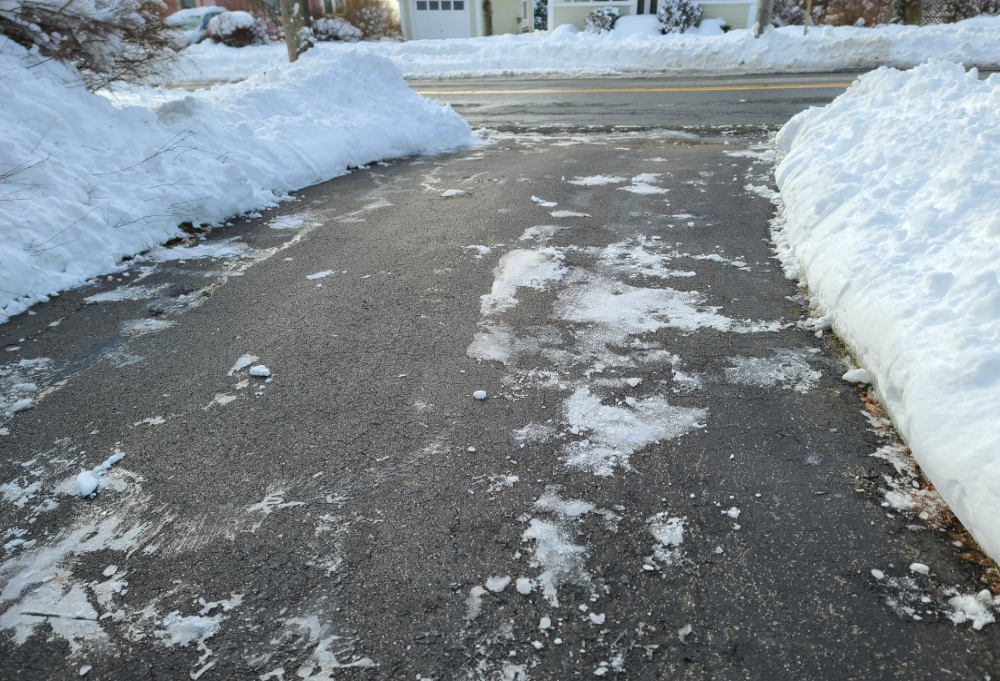
Salt lowers the freezing point of water, which means it keeps moisture in a liquid state at temperatures that would otherwise allow it to freeze. While this is useful for safety purposes, it actually prolongs the period during which liquid water can infiltrate asphalt cracks and pores. Rather than freezing quickly and staying put, the salt-laden water remains mobile and continues working its way deeper into the pavement structure throughout the day.
Beyond its effect on moisture behavior, salt also causes a chemical reaction with concrete and asphalt binders over time. It draws moisture out of the pavement material itself, causing the surface to become brittle and prone to raveling, the process by which aggregate particles break away from the surface layer. This creates a rough, deteriorated texture that accelerates further damage and shortens the lifespan of the pavement significantly. Property managers who notice surface raveling should contact paving services promptly, as early intervention can prevent the problem from spreading to deeper layers.
Heavy de-icing applications also wash into the surrounding soil and can soften or destabilize the base layers beneath the pavement. When the subbase becomes saturated or chemically altered, it loses its load-bearing capacity, which contributes to depressions, rutting, and cracking in the asphalt above.
Snowplow Damage and the Physical Impact of Winter Maintenance
While plowing is essential for keeping parking lots, driveways, and roadways passable during winter storms, the physical action of plowing can cause direct mechanical damage to asphalt surfaces. Plow blades, especially older or improperly adjusted ones, can scrape aggressively against the pavement surface, gouging out material and leaving behind deep scratches or gouges that weaken the surface layer.
Areas where the pavement is already cracked, patched, or uneven are particularly vulnerable. A plow blade catching the edge of a raised crack or a deteriorated patch can tear away chunks of asphalt, creating sudden large voids that worsen rapidly with continued traffic and exposure to water. Manholes, drainage grates, and pavement transitions are common problem zones where plow damage tends to concentrate.
The weight of snowplow trucks also plays a role. These vehicles are heavy pieces of equipment, and when they operate on pavement that has already been weakened by the freeze-thaw cycle or chemical deterioration, the added load stress can push compromised sections past their breaking point. Subbase movement caused by frozen and thawing ground makes the pavement even more susceptible to cracking under heavy vehicle loads during winter and early spring.
This combination of physical scraping, weight stress, and chemical damage means that most asphalt surfaces in the Midwest take a significant beating by the time spring arrives. Scheduling an inspection with a qualified paving services provider after each winter season is one of the best ways to catch developing problems early and address them before they require full-depth repairs.
Spring Thaw: When Winter Damage Becomes Fully Visible
One of the most deceptive aspects of winter pavement damage is that its full extent often does not become apparent until spring. During the winter months, snow and ice cover the surface, masking the cracks, depressions, and deterioration building up underneath. When the snow melts and temperatures stabilize, property owners are frequently surprised by the scale of damage that has accumulated over just a few months.
Spring thaw brings its own set of challenges. As the frozen subbase begins to thaw from the top down, the upper layers of soil become saturated while the deeper layers remain frozen and impermeable. This creates a trapped layer of saturated, unstable material just beneath the pavement surface, dramatically reducing its ability to support traffic loads. Roads and parking lots that handled vehicle traffic without issue throughout the winter can suddenly show severe cracking and pothole formation during the spring thaw period.
This is why early spring is consistently one of the busiest times of year for paving services across the Midwest. Property owners dealing with the aftermath of winter damage need prompt repairs to restore safety and functionality to their pavement. Delaying repairs during this window allows water to continue infiltrating the damaged areas, making conditions worse and driving up the eventual cost of restoration.
Sealcoating is one of the most effective preventive measures available for asphalt surfaces facing Midwest winters. Applying a quality sealcoat before winter arrives creates a protective barrier that reduces water infiltration, limits the impact of de-icing chemicals, and extends the overall lifespan of the pavement. However, once spring damage has already occurred, sealcoating alone is not sufficient; structural repairs must come first.
Conclusion
Midwest winters are genuinely hard on asphalt pavement, and the combination of freeze-thaw cycles, de-icing chemicals, snowplow activity, and spring thaw creates a damaging process that compounds with every passing season. Understanding these forces helps property owners make smarter decisions about maintenance timing and repair priorities. Working with experienced paving services providers to inspect, repair, and protect asphalt surfaces before and after winter is one of the most cost-effective investments any property owner in the Midwest can make.
Need a Residential and Commercial Paving Contractor Near You?
At Real Paving, we’re proud to be your trusted paving partner in Zion, Illinois, offering top-tier asphalt, concrete, brick, and stone solutions designed to last and impress. Our team is committed to delivering beautiful, durable results tailored to your specific project, whether it’s a new driveway, parking lot, or resurfacing work. We’d love to help make your next exterior construction project a success — reach out to us today for a free estimate, and let’s pave the way together!