
When it comes to asphalt paving, most people assume the work is pretty much the same regardless of the project. Pour the asphalt, smooth it out, and let it cure. But anyone working in the industry will tell you there is a significant gap between what goes into a residential driveway and what goes into a commercial parking lot or roadway. Understanding the differences between residential and commercial paving can help property owners make smarter decisions, set realistic expectations, and choose the right contractor for the job.
Whether you are a homeowner looking to resurface your driveway or a business owner planning a new parking facility, knowing what separates these two types of projects will save you time, money, and headaches down the road.
Scale and Scope of the Project
The most obvious difference between residential and commercial paving is the sheer size of the work involved. A typical residential driveway might cover anywhere from 400 to 1,000 square feet. A commercial project, on the other hand, could span tens of thousands of square feet, covering large parking lots, loading docks, access roads, and entryways.
This difference in scale has a ripple effect across every other aspect of the project. Larger surface areas require more materials, more labor, heavier equipment, and more detailed project management. Commercial paving crews are typically larger, and the timelines are more structured to minimize disruption to businesses, customers, and employees.
Residential projects tend to be more flexible in terms of scheduling. A homeowner can usually work around a paving crew with minimal inconvenience. Commercial projects, however, often require phased construction plans so that portions of a parking lot remain accessible while other sections are being paved. This kind of logistical coordination is a defining feature of professional commercial paving work.
Thickness, Materials, and Load Requirements
One of the most technically significant differences between residential and commercial paving lies in the thickness of the asphalt and the materials used to achieve the finished surface. These specifications are driven by one core factor: the weight and volume of traffic the surface must support.
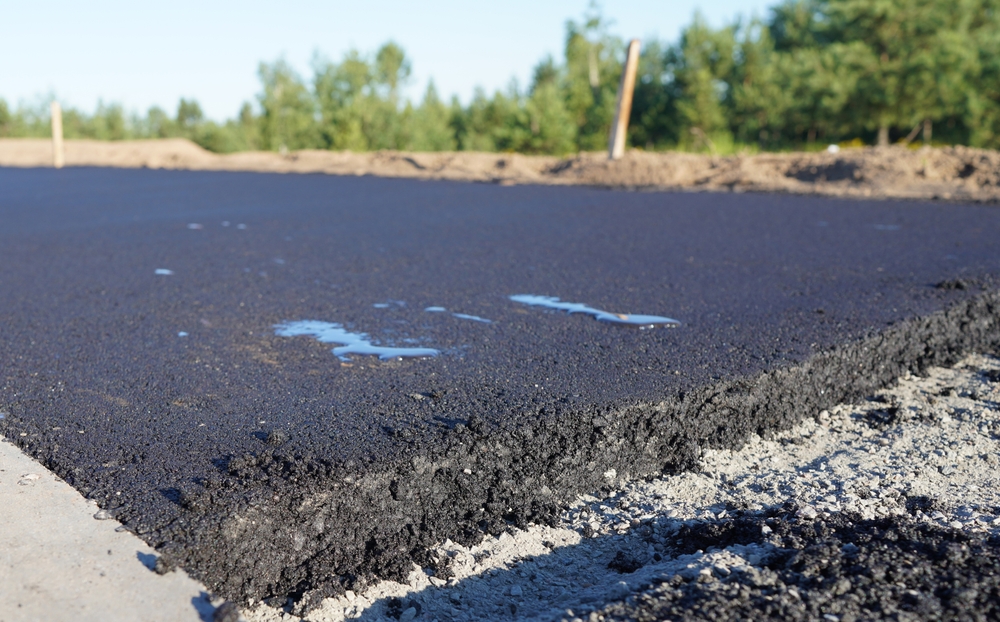
Residential driveways are designed to handle standard passenger vehicles, the occasional delivery truck, and light foot traffic. Because of this, a residential asphalt surface is typically installed at a thickness of around 2 to 3 inches over a compacted gravel base. This is sufficient for the load demands of a home driveway.
Commercial surfaces face an entirely different set of demands. Parking lots must accommodate large SUVs, delivery vehicles, and sometimes heavy trucks. Industrial or municipal paving projects may need to support garbage trucks, semi-trucks, or heavy construction equipment. To handle these loads without cracking or rutting, commercial asphalt is often laid at 4 to 8 inches thick or more, depending on the application.
The composition of the asphalt mix also differs between residential and commercial paving. Commercial projects frequently use a heavier aggregate mix designed for durability under sustained stress. Some commercial applications also incorporate multiple layers, including a base course, intermediate course, and surface course, each engineered to work together for long-term performance.
Equipment and Workforce
The tools and machinery involved in residential and commercial paving reflect the demands of each project type. Residential paving contractors typically use smaller, more maneuverable equipment suited for tight driveways, narrow access points, and suburban neighborhoods. Compact pavers, hand tampers, and smaller rollers are common on residential job sites.
Commercial paving requires industrial-grade equipment capable of handling large volumes of asphalt efficiently and consistently. Full-sized asphalt pavers, heavy vibratory rollers, milling machines, and large dump trucks are standard on commercial job sites. The sheer volume of material being moved and placed demands equipment with greater capacity and precision.
The workforce behind residential and commercial paving also differs in size and specialization. Residential crews may consist of just a few experienced workers who can complete a standard driveway in a single day. Commercial crews are larger and often include project managers, safety supervisors, equipment operators, and laborers working in coordinated roles. This reflects the complexity and accountability required on large-scale commercial projects.
Contractors who specialize in both residential and commercial paving understand how to transition between these two operating environments. They know when to bring in larger equipment and when a smaller, more careful approach is needed.
Permits, Regulations, and Drainage Considerations
Navigating the permitting and regulatory landscape is another area where residential and commercial paving diverge considerably. Residential paving projects are generally straightforward from a compliance standpoint. In most jurisdictions, resurfacing a private driveway does not require formal permits, though some local municipalities may have rules about impervious surfaces or proximity to the street.
Commercial paving projects are subject to far more rigorous oversight. Business owners and developers typically need to obtain permits before work begins, and the finished surface must comply with local zoning codes, Americans with Disabilities Act (ADA) requirements, fire lane specifications, and other regulations. ADA compliance alone introduces a range of requirements around parking space dimensions, accessible routes, slope tolerances, and surface conditions.
Drainage is another critical consideration that is treated very differently across residential and commercial paving projects. A residential driveway needs to slope away from the home to prevent water from pooling near the foundation, but the drainage design is usually relatively simple.
Commercial paving projects involve complex stormwater management planning. Large impervious surfaces generate significant runoff, which must be directed through catch basins, retention ponds, or underground drainage systems in compliance with environmental regulations. Engineers and site planners are often brought in to design drainage solutions that protect surrounding properties and local waterways. Failing to account for drainage in a commercial project can result in costly damage, regulatory fines, and safety hazards.
Contractors who work in both residential and commercial paving must be well-versed in local codes and environmental requirements to deliver projects that are not only functional but also fully compliant.
Cost, Maintenance, and Long-Term Value
When comparing the costs of residential and commercial paving, the differences are substantial, though both types of projects represent a meaningful investment. Residential driveway paving is priced per square foot and typically falls within a moderate price range depending on the region, materials used, and site preparation needed. Most homeowners can budget for a new driveway or resurfacing project without requiring elaborate financing.
Commercial paving projects involve significantly higher costs due to their scale, material requirements, and regulatory complexity. A large commercial parking lot can cost hundreds of thousands of dollars to install from scratch. However, when you factor in the lifespan of a well-constructed commercial asphalt surface, which can last 20 to 30 years with proper maintenance, the long-term return on investment is strong.
Maintenance practices also differ between the two project types. Residential driveways benefit from periodic sealcoating every few years, crack filling, and avoiding heavy loads that could cause premature wear. Commercial surfaces require more formalized maintenance programs, including regular inspections, crack sealing, line restriping, and sealcoating on a scheduled basis to extend the pavement’s useful life and keep the surface safe and visually appealing for customers and employees.
Investing in quality paving from the start, whether for a home or a business, reduces the frequency and cost of repairs over time. Both residential and commercial paving done right adds genuine value and curb appeal to any property.
Conclusion
The differences between residential and commercial paving go far beyond size. From materials and equipment to regulations and drainage, each project type comes with its own set of demands and standards. Understanding these distinctions helps property owners communicate more clearly with contractors and make informed decisions about their paving needs. Whether you are planning a simple driveway upgrade or a full-scale commercial paving project, working with an experienced contractor who understands both worlds is the key to getting results that last.
Need a Residential and Commercial Paving Contractor Near You?
At Real Paving, we’re proud to be your trusted paving partner in Zion, Illinois, offering top-tier asphalt, concrete, brick, and stone solutions designed to last and impress. Our team is committed to delivering beautiful, durable results tailored to your specific project, whether it’s a new driveway, parking lot, or resurfacing work. We’d love to help make your next exterior construction project a success — reach out to us today for a free estimate, and let’s pave the way together!