
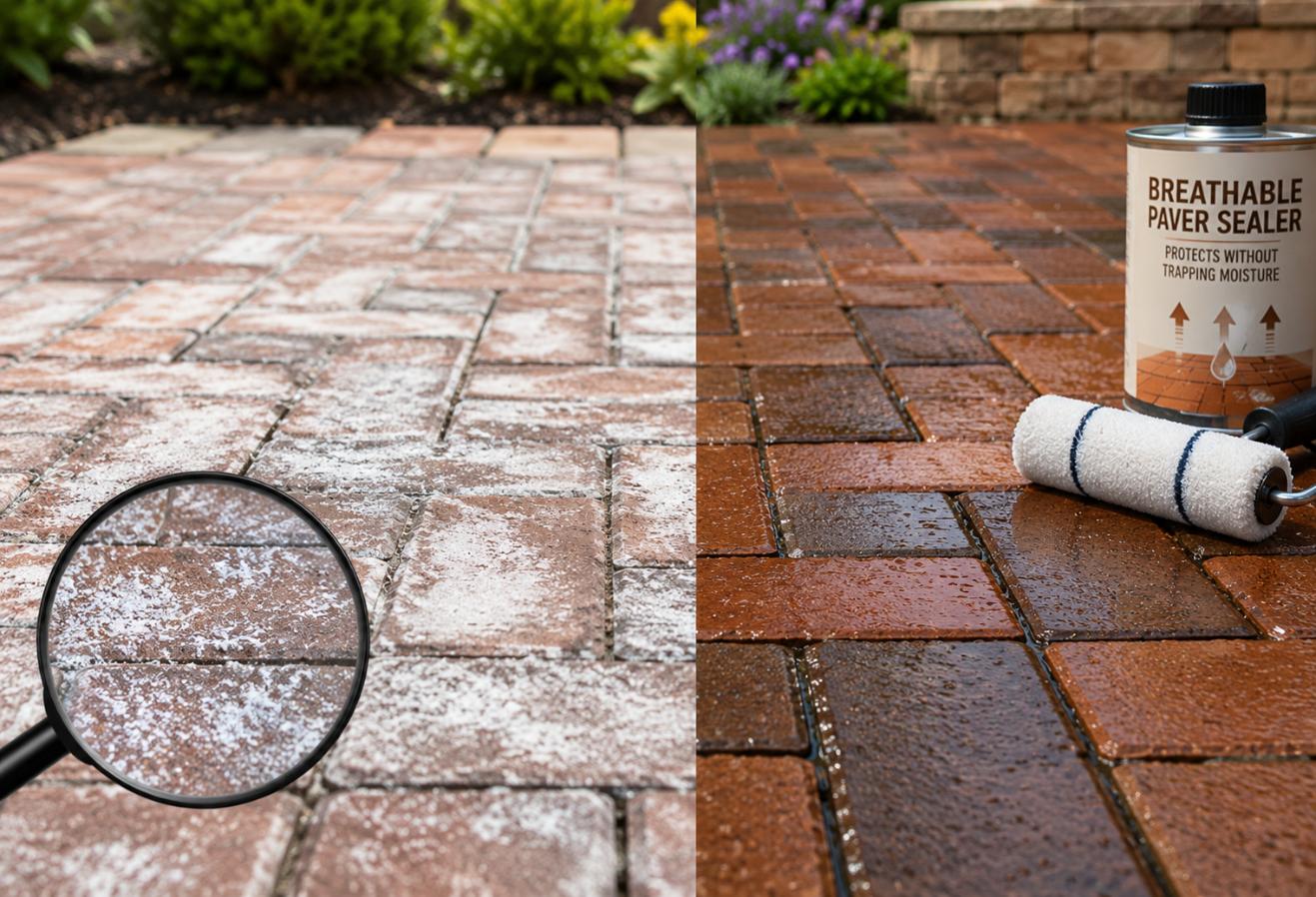
If you’ve noticed a white, chalky film appearing on your brick pavers, you’re likely seeing efflorescence. This common issue often surprises homeowners after a new patio, driveway, or walkway is installed, especially following rainy weather or seasonal temperature changes in Lake County, IL.
The good news is that efflorescence is usually a cosmetic issue rather than a sign that your pavers are failing. Understanding what causes it and how to remove it properly can help protect the appearance of your outdoor living space for years to come.
Quick Answer
White salt film on brick pavers is called efflorescence. It occurs when water moves through the pavers or base materials, dissolves naturally occurring salts, and carries them to the surface. As the water evaporates, the salts remain behind as a white residue. Proper cleaning followed by the application of a breathable sealer can help minimize future buildup while allowing moisture to escape naturally.
What Lake County Homeowners Should Know
-
Efflorescence is common on new and existing brick paver installations throughout Lake County because of seasonal moisture and freeze-thaw cycles.
-
The white film is usually harmless to the structural integrity of your pavers but can affect curb appeal.
-
Pressure washing alone may not completely remove mineral deposits and can sometimes worsen the problem if done incorrectly.
-
Breathable sealers help reduce future efflorescence while allowing trapped moisture to escape from beneath the surface.
-
Communities like Libertyville, Vernon Hills, Gurnee, Grayslake, and Waukegan all experience weather conditions that contribute to recurring moisture movement.
Why This Matters Locally
Efflorescence is especially common in Lake County because of the region’s changing seasons. Snow, spring rains, humid summers, and repeated freeze-thaw cycles create ideal conditions for moisture to move through brick pavers and their base materials.
Whether your home is near the Chain O’Lakes, along Lake Michigan, or in established neighborhoods throughout Mundelein, Lake Zurich, or Highland Park, moisture can repeatedly migrate through paver systems. That movement increases the likelihood of mineral deposits appearing on patios, walkways, pool decks, and driveways.
At Real Paving, we regularly help local homeowners restore the appearance of their hardscapes while using cleaning and sealing methods designed for the conditions found throughout northern Illinois.
Local Field Observations
Professional field experience shows that efflorescence most commonly appears during the first year after installation, although older paver surfaces can also develop it following heavy rainfall or prolonged wet weather.
New installations often experience the highest concentration because both the pavers and the bedding materials naturally contain soluble mineral salts. As moisture evaporates over time, the amount of available salt gradually decreases, making future occurrences less noticeable.
How Efflorescence Affects Local Properties
Efflorescence does not usually weaken brick pavers, but it can make an otherwise beautiful outdoor space appear aged or poorly maintained.
For Lake County homeowners, the impact often includes:
-
Reduced curb appeal.
-
Uneven coloring across patios and walkways.
-
A dull appearance that hides the natural color of the pavers.
-
Difficulty determining whether the issue is dirt, mold, or mineral buildup.
-
Additional maintenance if the deposits are allowed to accumulate.
Warning Signs of Efflorescence
White salt film is usually easy to recognize. Common signs include:
-
White powder or chalk-like residue on the surface.
-
Hazy patches that return after cleaning.
-
More noticeable buildup after rainfall.
-
Deposits concentrated near joints between pavers.
-
White streaks appearing on retaining walls or steps.
-
Surface discoloration without signs of mold or algae.
-
New installations developing a cloudy appearance within several months.
When to Call a Professional
Efflorescence can often be monitored when only light surface deposits are present. However, professional service is recommended if:
-
The white film continues returning after repeated cleaning.
-
Large portions of the patio are affected.
-
Pressure washing has not solved the problem.
-
The pavers also show joint sand erosion or shifting.
-
You plan to seal the pavers after cleaning.
Professional cleaning helps remove mineral deposits while minimizing damage to the paver surface and surrounding joint materials.
Common Local Causes of Efflorescence
Efflorescence develops because moisture transports dissolved salts to the surface. Several local conditions increase the likelihood.
1. Seasonal Rainfall
Spring and fall rainfall saturate the paver system, allowing water to carry minerals upward.
2. Freeze-Thaw Cycles
Northern Illinois winters repeatedly freeze and thaw moisture beneath the pavers, encouraging continued mineral migration.
3. New Paver Installations
Freshly manufactured brick pavers naturally contain soluble salts that gradually work their way out during the curing process.
4. Poor Drainage
Improper grading or drainage can leave moisture trapped beneath patios and walkways for extended periods.
5. Irrigation and Standing Water
Frequent watering or areas where water pools after storms allow more moisture to move through the paver system.
Prevention and Maintenance
While efflorescence cannot always be completely prevented, proper maintenance greatly reduces its appearance.
Helpful practices include:
-
Keep drainage flowing away from paved surfaces.
-
Sweep debris regularly to prevent moisture retention.
-
Allow new installations sufficient time before sealing when appropriate.
-
Remove early mineral buildup before heavy accumulation develops.
-
Apply a breathable paver sealer after the surface has been properly cleaned and dried.
-
Schedule periodic inspections after severe winters.
What Results Can You Expect?
Most homeowners notice a significant improvement after professional efflorescence removal. Cleaning restores much of the pavers’ original color while breathable sealers help reduce future mineral deposits.
Although small amounts of efflorescence may occasionally return during particularly wet seasons, routine maintenance typically makes future buildup much easier to manage.
Common Mistakes
Using Household Cleaners
Mistake: Cleaning with products not intended for masonry.
Consequence: Surface damage or incomplete removal.
Better approach: Use cleaners specifically formulated for brick paver efflorescence.
Applying Non-Breathable Sealers
Mistake: Sealing moisture beneath the surface.
Consequence: Trapped moisture may create additional whitening or sealer failure.
Better approach: Use breathable sealers designed for paver systems.
Pressure Washing Too Aggressively
Mistake: Using excessive pressure.
Consequence: Loss of joint sand and unnecessary surface wear.
Better approach: Clean using proper techniques that preserve the installation.
Common Local Scenario
A homeowner in Lake County installs a beautiful brick paver patio in the fall. After snow melts the following spring, white patches begin appearing across portions of the surface. The pavers themselves remain in excellent condition, but mineral salts carried upward by melting snow and seasonal moisture leave a chalky film behind. Professional cleaning followed by a breathable sealer restores the appearance while helping reduce future recurrence.
Related Service Solutions
Efflorescence removal often fits into a larger hardscape maintenance plan that may include:
-
Professional paver cleaning.
-
Joint sand replacement.
-
Polymeric sand installation.
-
Breathable paver sealing.
-
Patio restoration.
-
Walkway maintenance.
-
Driveway paver cleaning.
Comparing Your Options
| Option | Advantages | Considerations |
|---|---|---|
| DIY Cleaning | Lower upfront cost for light buildup | May not remove deeper mineral deposits |
| Professional Cleaning | Thorough removal using proper products and techniques | Higher initial investment |
| Cleaning Only | Restores appearance temporarily | Future buildup may return sooner |
| Cleaning Plus Breathable Sealer | Improves appearance while helping reduce future efflorescence | Requires proper surface preparation |
Service Areas
We proudly serve homeowners throughout Lake County, including Libertyville, Vernon Hills, Grayslake, Gurnee, Mundelein, Lake Zurich, Highland Park, Waukegan, and nearby communities across northern Illinois.
Cost of Ignoring the Issue
Although efflorescence itself is generally cosmetic, allowing mineral deposits to build up can make future cleaning more difficult and leave outdoor spaces looking neglected. Ignoring drainage problems that contribute to recurring moisture may also lead to additional maintenance concerns over time.
Frequently Asked Questions
Is white salt film common on brick pavers in Lake County, IL?
Yes. Efflorescence is common throughout Lake County because seasonal rainfall, winter snow, and freeze-thaw cycles allow moisture to carry natural mineral salts to the surface of brick pavers.
Does efflorescence damage brick pavers?
No. Efflorescence is generally a cosmetic issue rather than structural damage. However, recurring moisture problems should still be evaluated to ensure proper drainage.
Can rain make efflorescence worse?
Yes. Additional rainfall provides more moisture to dissolve and transport mineral salts, making white deposits more noticeable after wet weather.
Should brick pavers in Lake County be sealed?
Yes. A breathable sealer can help reduce future efflorescence while allowing moisture vapor to escape, making it a preferred option for many hardscape installations.
Will pressure washing remove efflorescence?
Sometimes. Light deposits may improve with careful cleaning, but deeper mineral buildup often requires specialized cleaning products and professional techniques.
How long does efflorescence last?
The most noticeable buildup often occurs during the first year after installation. Over time, the amount of available mineral salts typically decreases, reducing future occurrences.
Can winter weather in northern Illinois increase efflorescence?
Yes. Freeze-thaw cycles create repeated moisture movement beneath pavers, increasing the likelihood of mineral deposits reaching the surface.
When should I call a professional for efflorescence?
Professional service is recommended if the white film repeatedly returns, covers a large area, or if you plan to seal your brick pavers after cleaning.
Closing
Efflorescence is one of the most common cosmetic concerns affecting brick pavers throughout Lake County, but it is also one of the most manageable. Understanding why it develops and using proper cleaning and breathable sealing methods helps preserve the beauty of your outdoor living spaces while reducing future maintenance.
Restore the Natural Beauty of Your Brick Pavers
Our experienced team helps Lake County homeowners remove stubborn efflorescence and protect their hardscapes with professional cleaning and breathable sealing solutions.