
Heavy spring rains, summer downpours, and snowmelt can put a lot of stress on residential drainage systems throughout Lake County, IL. Homeowners planning a new patio often focus on appearance and durability, but local stormwater runoff requirements can also influence design decisions. Understanding how permeable brick paver patios fit into Lake County’s approach to managing runoff can help you make informed choices before your project begins.
Quick Answer
Permeable brick paver patios help reduce stormwater runoff by allowing rainwater to filter through the surface and into the ground instead of flowing directly into storm drains. In Lake County, IL, this type of hardscape may support better site drainage and help manage runoff when designed appropriately. Property owners should always verify whether permits or local municipal requirements apply before construction.
What Local Readers Should Know
-
Permeable brick pavers are designed with joints that allow water to pass through into a specially prepared base.
-
Many communities throughout Lake County encourage practices that reduce runoff and improve groundwater infiltration.
-
Freeze and thaw cycles common across northern Illinois make proper base preparation especially important for long-term performance.
-
Areas near the Des Plaines River, Chain O’Lakes, and local wetlands often have additional drainage considerations.
-
Local municipalities may have their own permitting or grading requirements beyond county guidance.
Why This Matters Locally
Managing stormwater is an important issue throughout Lake County because heavy rainfall, clay-rich soils, and developed neighborhoods can create drainage challenges. Communities such as Libertyville, Vernon Hills, Gurnee, Mundelein, Grayslake, Waukegan, and Lake Zurich all experience periods of intense rainfall that can overwhelm traditional drainage systems.
Installing hard surfaces that direct water toward streets or neighboring properties may contribute to localized drainage problems. Permeable paving offers an alternative that works with natural infiltration rather than against it.
At Real Paving, we regularly help homeowners evaluate outdoor living projects that balance attractive design with practical drainage considerations. We believe every patio should complement both the property and the surrounding environment.
Local Data and Field Observations
According to information published by the Lake County Stormwater Management Commission, managing stormwater runoff helps reduce localized flooding, protect water quality, and support healthier waterways throughout the county. Local municipalities may also adopt additional stormwater ordinances that affect residential improvement projects.
From our field observations, many existing patios installed decades ago were built with minimal drainage planning. As patios age or surrounding grades change, homeowners often notice standing water, erosion, or runoff collecting near foundations. Modern permeable systems can address many of these concerns when installed with proper site evaluation and construction practices.
Permeable Brick Paver Patios Help Manage Stormwater More Effectively
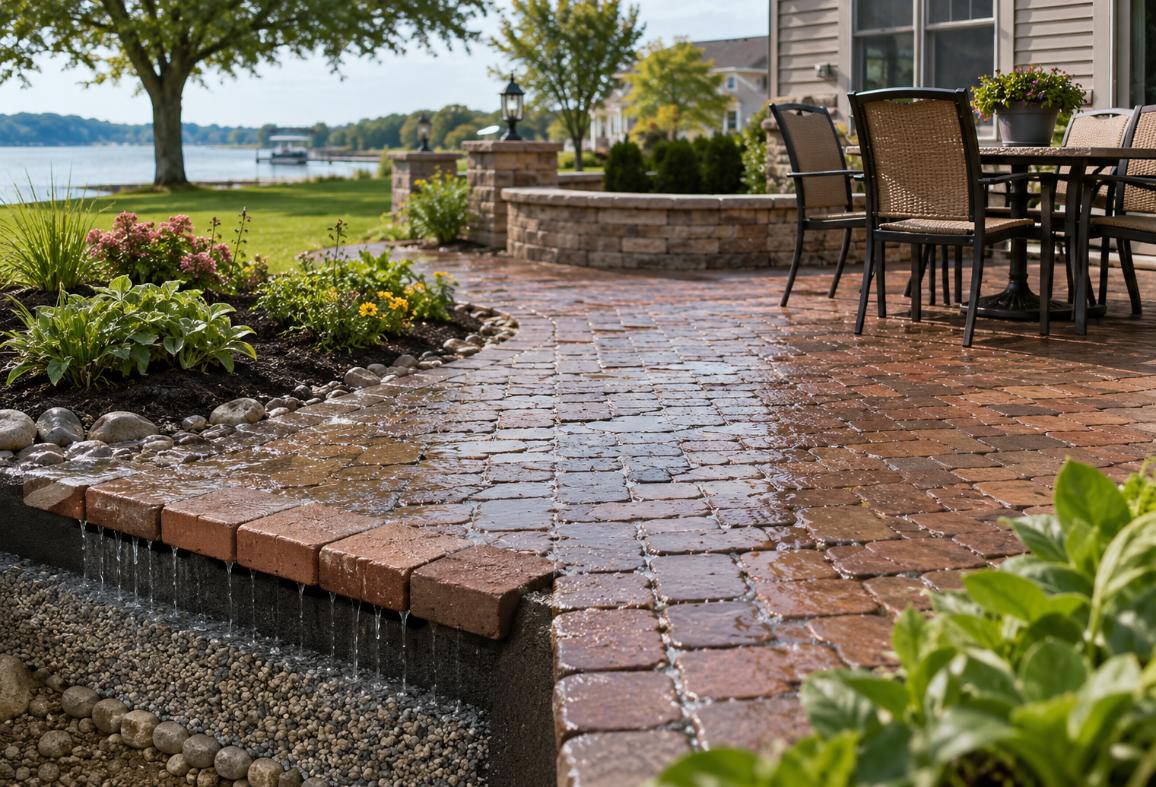
Permeable brick paver patios help reduce runoff by allowing rainwater to soak through the surface instead of immediately flowing away. The system works because water passes through the joints between pavers into layers of clean, open-graded stone below.
Unlike traditional concrete slabs that shed water, permeable systems temporarily store rainfall beneath the surface before allowing it to slowly infiltrate into the soil.
This approach may help:
-
Reduce puddling after storms
-
Minimize runoff entering storm drains
-
Support groundwater recharge
-
Reduce erosion around landscaped areas
-
Improve drainage around patios and outdoor living spaces
How Lake County Conditions Affect Patio Design
Lake County’s weather and soil conditions influence how permeable patios should be designed. Proper planning takes local conditions into account from the beginning.
Important factors include:
-
Clay-heavy soils that infiltrate water more slowly
-
Seasonal freeze and thaw cycles
-
Mature tree root systems
-
Existing drainage patterns
-
Nearby wetlands or protected waterways
-
Local grading requirements
Every property is different, which is why drainage should be evaluated before selecting patio materials.
Warning Signs Your Existing Patio May Have Drainage Problems
Several visible signs may indicate that your current patio or surrounding landscape is not handling stormwater effectively.
Common warning signs include:
-
Standing water that remains hours after rainfall
-
Water flowing toward your home’s foundation
-
Soil erosion around patio edges
-
Sinking or uneven pavers
-
Moss or algae growth from constant moisture
-
Washed-out mulch after storms
-
Excessive runoff entering neighboring properties
These symptoms often indicate underlying drainage issues rather than simply surface wear.
When to Call a Professional
Professional evaluation is recommended when drainage issues involve grading, significant runoff, or structural concerns. While homeowners can monitor standing water or clean debris from surface joints, larger drainage corrections require careful planning.
Professional assessment becomes especially valuable if:
-
Water regularly reaches your home’s foundation.
-
The patio experiences recurring settling.
-
Drainage affects neighboring properties.
-
Significant grading changes are needed.
-
Municipal permitting may apply.
Proper design helps ensure both drainage performance and long-term durability.
Common Local Causes of Stormwater Problems
Several conditions commonly contribute to runoff concerns throughout Lake County.
1. Heavy Rainfall Events
Summer thunderstorms can produce large volumes of water in a short period.
2. Clay-Based Soils
Many properties have soils that absorb water slowly, increasing surface runoff.
3. Aging Hardscapes
Older concrete patios often direct water rather than absorb it.
4. Improper Grading
Even small elevation changes can redirect water toward structures or neighboring lots.
5. Increased Impervious Surfaces
Additional driveways, walkways, and patios reduce natural infiltration if drainage isn’t considered during design.
Prevention and Maintenance
Proper maintenance helps permeable brick paver patios continue performing as intended.
Helpful practices include:
-
Remove leaves and debris from the surface regularly.
-
Sweep joints to prevent sediment buildup.
-
Inspect drainage after major storms.
-
Replace joint material if needed.
-
Avoid sealing systems designed for permeability.
-
Address settling before it becomes widespread.
Scheduling periodic inspections can identify developing drainage concerns before they become costly repairs.
Expected Results
A properly designed permeable patio can improve drainage performance while creating an attractive outdoor living area. Homeowners may notice reduced puddling, improved surface stability, and better water management during normal rainfall events.
Actual performance depends on site conditions, soil characteristics, installation quality, and ongoing maintenance.
Common Mistakes
Mistake: Installing permeable pavers without evaluating site drainage.
Consequence: Water may still collect beneath the system or flow toward structures.
Better Approach: Begin with a site evaluation before selecting materials.
Mistake: Using improper base materials.
Consequence: Reduced drainage performance and potential settling.
Better Approach: Use the stone base specified for permeable pavement systems.
Mistake: Allowing joints to fill with dirt.
Consequence: Water infiltration gradually decreases.
Better Approach: Perform routine cleaning and maintenance.
Common Local Scenario
A homeowner in Lake County replaces an aging concrete patio after years of standing water following heavy rains. During planning, the drainage pattern is evaluated, grading is adjusted where appropriate, and a permeable brick paver system is installed with a properly prepared stone base. After completion, rainfall drains more efficiently, reducing puddles while creating a more attractive outdoor space.
Related Service Solutions
Permeable patios are one part of an overall drainage-conscious landscape design. Depending on your property, related services may include:
-
Brick paver patio installation
-
Walkway installation
-
Retaining walls
-
Outdoor living spaces
-
Drainage improvements
-
Patio replacement
-
Hardscape design consultation
Comparing Your Options
| Option | Benefits | Considerations |
|---|---|---|
| Traditional Concrete Patio | Lower initial installation approach for some projects | Directs more runoff and may require additional drainage measures |
| Standard Brick Paver Patio | Attractive appearance and repairable surface | Drainage depends on design and grading |
| Permeable Brick Paver Patio | Allows water infiltration and supports stormwater management | Requires proper installation and periodic maintenance |
Service Areas
We proudly serve homeowners throughout Lake County, including Libertyville, Vernon Hills, Gurnee, Grayslake, Mundelein, Lake Zurich, Waukegan, and surrounding communities. Every project begins with understanding the unique drainage conditions of the property.
Cost of Ignoring the Issue
Ignoring drainage concerns can lead to recurring puddles, erosion, settling hardscapes, landscape damage, and increased maintenance over time. Addressing runoff during a patio project is often more practical than correcting drainage problems after installation.
Frequently Asked Questions
Do permeable brick pavers work well in Lake County?
Yes. Permeable brick pavers can perform well in Lake County when designed for local soil conditions, drainage patterns, and freeze-thaw cycles. Proper installation is essential for long-term performance.
Are permits required for a patio in Lake County, IL?
Possibly. Permit requirements vary depending on your municipality, project size, grading changes, and other site conditions. Homeowners should verify requirements with their local building department before beginning construction.
Can permeable pavers reduce standing water?
Yes. Properly installed permeable pavers allow water to pass through the surface and into the stone base below, helping reduce surface puddling during many rainfall events.
Will permeable patios survive Illinois winters?
Yes. When installed correctly with an appropriate base, permeable paver systems are designed to perform through northern Illinois freeze and thaw cycles.
Do permeable pavers require more maintenance?
Yes, but the maintenance is generally straightforward. Periodic cleaning and preventing joint clogging help preserve water infiltration over time.
Are permeable patios suitable for all Lake County properties?
Not always. Soil conditions, grading, groundwater levels, and local regulations all influence whether a permeable system is the best solution for a particular property.
Can permeable patios improve drainage around my home?
They can contribute to improved drainage by reducing surface runoff, although overall drainage performance depends on the property’s grading and other site-specific factors.
Why choose brick pavers instead of poured concrete?
Brick pavers offer design flexibility, individual repairability, and, in permeable systems, improved stormwater management compared to traditional solid concrete surfaces.
Build an Outdoor Space That Works With Lake County’s Climate
A beautiful patio should do more than enhance your backyard. It should also work with your property’s natural drainage and local environmental conditions. Thoughtful planning today can help reduce future maintenance while creating an outdoor space you’ll enjoy for years.
Ready to Plan a Smarter Patio?
Whether you’re replacing an aging patio or designing a brand-new outdoor living space, we’re here to help you explore attractive solutions that fit your property and drainage needs.